

Best Dynamic Microphones for Vocals & Live Performance (2026)
In This Guide
Best Overall Live Vocal Microphones • Best for Studio-Style Vocal Recording • Best for Loud Stages & Feedback Rejection • Best Budget / Entry-Level Dynamic Microphones • Best Hybrid USB / XLR Dynamic Microphones • Microphone Comparison Table • FAQ – Dynamic Microphones for Vocals
Choosing the right dynamic microphone can make a significant difference to vocal clarity, control and reliability in live performance, recording and professional voice work. Known for their durability, ability to handle high sound-pressure levels and suitability for close-microphone applications, dynamic microphones are particularly valuable in demanding environments where dependable vocal capture matters.
This guide compares the best dynamic microphones for vocals in 2026, organised around real-world uses and different performance needs. Each recommendation considers vocal character, clarity, handling, durability, directional behaviour and practical suitability for live performance, home and professional studio recording, podcasting, streaming, loud stages and hybrid USB/XLR workflows.
For deeper technical insight, the Dynamic Microphones Guide explains microphone behaviour, polar patterns and selection principles, while the Dynamic Microphone Brands Guide compares Shure, Sennheiser, Electro-Voice, Telefunken, RØDE, Heil Sound, Audix and Behringer. For direct product exploration, browse my selected dynamic microphones.
Best Overall Live Vocal Microphones
Shure SM58
The Shure SM58 remains a reference live-vocal dynamic microphone, combining cardioid pickup, robust construction and predictable vocal voicing across rehearsal rooms, clubs and professional stages.
Who it suits. Singers wanting one dependable microphone that works across many venues and sound systems.
What to consider. For greater definition or tighter isolation, consider the Beta 58A, Audix OM series or Telefunken M80.
Verdict: A dependable all-round reference choice for live vocals.

Shure Beta 58A
The Shure Beta 58A offers tighter supercardioid pickup and greater upper-frequency presence than the SM58, helping vocals remain articulate on louder stages.
Who it suits. Experienced singers wanting stronger stage isolation and a more focused, present vocal sound.
What to consider. Its tighter pattern requires more precise microphone and monitor positioning, while naturally bright voices may prefer a smoother presentation.
Verdict: A focused and articulate Shure alternative for experienced live vocalists.

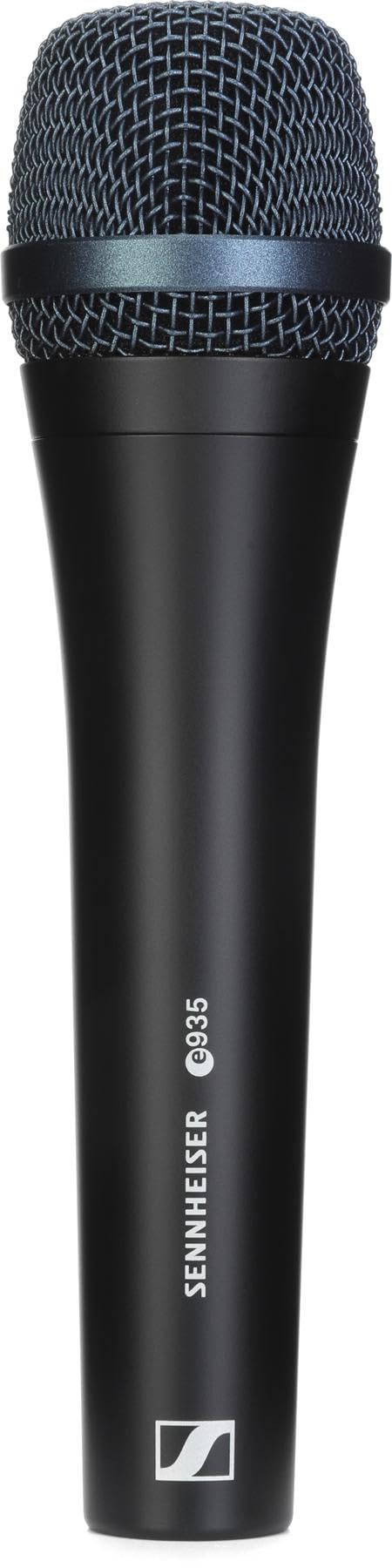
Sennheiser e935
The Sennheiser e935 is a cardioid dynamic vocal microphone offering clear, balanced sound and dependable professional stage performance.
Who it suits. Singers wanting natural vocal clarity without an aggressively bright or highly specialised tonal character.
What to consider. Exceptionally loud stages may benefit from a more directional microphone with greater isolation.
Verdict: A balanced professional choice for natural vocal clarity and reliable stage behaviour.
Telefunken M80
The Telefunken M80 provides greater upper-frequency extension and articulation than many traditional handheld dynamics, producing an immediate and detailed vocal presentation.
Who it suits. Singers whose voices benefit from additional presence, definition and articulation.
What to consider. Naturally bright or highly projecting voices may not need its additional upper-frequency emphasis.
Verdict: A detailed, present dynamic microphone for singers wanting greater vocal definition.

Best for Studio-Style Vocal Recording
Shure SM7B
The Shure SM7B is a studio and broadcast dynamic microphone known for smooth close-range voice capture and controlled directional pickup.
Who it suits. Singers, podcasters, broadcasters and voice professionals wanting a smooth, controlled close-miked sound.
What to consider. Its relatively low output requires sufficient clean preamp gain, and it does not eliminate poor room acoustics or background noise.
Verdict: A studio and broadcast reference for controlled close-miked voice and vocals.


Electro-Voice RE20
The Electro-Voice RE20 is a classic broadcast and recording dynamic microphone whose Variable-D design helps maintain more consistent tonal balance as working distance changes.
Who it suits. Broadcasters, podcasters, narrators and singers who value tonal consistency during close voice recording.
What to consider. Its large body is unsuitable for conventional handheld performance, while its controlled proximity effect may not suit users seeking a pronounced close-miked bass boost.
Verdict: An outstanding broadcast and recording dynamic for consistent tone across changing working distances.

Best for Loud Stages & Maximum Feedback Rejection
Audix OM7
The Audix OM7 is a specialised live-vocal dynamic microphone with tight hypercardioid pickup and low sensitivity, designed for strong isolation on demanding stages.
Who it suits. Experienced singers working with loud bands, powerful monitoring systems or acoustically difficult stages.
What to consider. Its low output and tight pickup require appropriate gain structure and disciplined close-microphone technique.
Verdict: A specialised high-isolation choice for experienced singers on high-volume stages.

Electro-Voice ND96
The Electro-Voice ND96 is a supercardioid dynamic vocal microphone designed to maintain strong vocal presence and directional control in high-volume live environments.
Who it suits. Lead singers competing with loud backline, monitors and dense amplified instrumentation.
What to consider. Positioning and monitor placement matter, and its assertive stage-oriented character may be unnecessary in quieter environments.
Verdict: A powerful, focused vocal microphone for loud stages where projection and isolation matter.

Best Budget / Entry-Level Dynamic Microphones
Shure PGA48
The Shure PGA48 is an accessible cardioid dynamic microphone for speech, rehearsal, karaoke and entry-level vocal applications.
Who it suits. Beginners, schools, rehearsal spaces and venues needing dependable microphones at a lower cost.
What to consider. Regular performers should compare its price with the SM58, which offers broader long-term professional utility.
Verdict: A practical budget choice for rehearsal, speech and entry-level vocal use.

Best Hybrid USB / XLR Dynamic Microphones
Shure MV7
The Shure MV7 combines a voice-focused dynamic design with USB and XLR connectivity, allowing direct computer recording or integration with a conventional audio interface or mixer.
Who it suits. Podcasters, streamers, educators and voice professionals wanting USB convenience with an XLR upgrade path.
What to consider. It is not simply a USB version of the SM7B, and singers who do not need hybrid connectivity may prefer a more specialised vocal microphone.
Verdict: A flexible choice for voice users wanting both USB convenience and XLR connectivity.

Dynamic Microphone Comparison Table
| Microphone | Best For | Pickup Pattern | Vocal Character | Key Strength | What to Consider |
|---|---|---|---|---|---|
| Shure SM58 | All-round live vocals | Cardioid | Balanced, familiar, forgiving | Reliability and versatility | Less specialised than tighter or more detailed alternatives |
| Shure Beta 58A | Lead vocals requiring greater focus | Supercardioid | Present, focused, articulate | Definition and directional control | Requires more attention to positioning and monitor placement |
| Sennheiser e935 | Natural-sounding live vocals | Cardioid | Balanced, clear, natural | Vocal clarity with relatively forgiving handling | Less isolation than some tighter-pattern stage microphones |
| Telefunken M80 | Detailed live and session vocals | Supercardioid | Open, present, detailed | Upper-frequency definition | Additional presence may not suit naturally bright voices |
| Shure SM7B | Studio, podcast and broadcast vocals | Cardioid | Smooth, controlled, full | Close-miked voice and vocal recording | Requires sufficient clean preamplifier gain |
| Electro-Voice RE20 | Broadcast, narration and studio voice | Cardioid | Controlled, natural, consistent | Reduced proximity-effect variation through Variable-D design | Large format and less suited to handheld stage use |
| Audix OM7 | Very loud stages | Hypercardioid | Focused, controlled, isolated | High stage isolation and gain before feedback | Low output and demanding close-microphone technique |
| Electro-Voice ND96 | Loud amplified performances | Supercardioid | Focused, assertive, clear | Vocal projection and stage isolation | Positioning and monitor configuration remain important |
| Shure PGA48 | Beginners, rehearsal and speech | Cardioid | Simple, functional, voice-focused | Affordability and straightforward operation | Regular performers may benefit from investing in an SM58 |
| Shure MV7 | Podcasting, streaming and home voice recording | Cardioid | Controlled, modern, voice-focused | USB and XLR connectivity | Hybrid connectivity may be unnecessary for conventional studio users |
FAQ – Dynamic Microphones for Vocals
What is the best dynamic microphone for live vocals?
The Shure SM58 remains one of the safest all-round choices because of its reliability, familiar vocal response and widespread use across professional sound systems. However, the best microphone depends on the singer and stage environment. The Shure Beta 58A and Sennheiser e935 offer alternative vocal characteristics, while microphones such as the Audix OM7 and Electro-Voice ND96 are particularly relevant when greater stage isolation is required.
Are dynamic microphones good for recording vocals?
Yes. Dynamic microphones can be excellent recording tools, particularly for powerful singers, close-miked vocals and situations where a controlled, direct sound is desirable. Models such as the Shure SM7B and Electro-Voice RE20 are widely associated with studio, broadcast and voice recording. A condenser microphone may provide greater high-frequency extension or transient detail, but that does not make it automatically better for a particular voice.
What is the difference between a dynamic and condenser microphone?
A conventional moving-coil dynamic microphone generates its electrical signal through electromagnetic induction and is generally valued for robust construction, high sound-pressure-level capability and practical reliability. Condenser microphones use a different transducer principle and active electronics, typically requiring power. They often provide greater sensitivity and extended high-frequency response, but the better choice depends on the source, acoustic environment and intended sound.
Which dynamic microphone is best for a loud stage?
Highly directional models such as the Audix OM7 and Electro-Voice ND96 are designed with demanding amplified environments in mind. However, feedback performance depends on the complete sound system rather than the microphone alone. Polar pattern, monitor position, microphone angle, stage volume, gain structure and the singer’s microphone technique all affect how much usable level can be achieved before feedback.
Does a dynamic microphone reduce background noise?
Not automatically. A microphone does not distinguish between wanted and unwanted sound simply because it uses a dynamic transducer. However, close microphone placement can increase the level of the direct voice relative to room reflections and more distant sounds. Polar pattern, working distance, microphone orientation and the acoustic environment are therefore critical when trying to reduce unwanted sound in a recording.
Does a more expensive dynamic microphone sound better?
Not necessarily. Higher-priced microphones may offer different capsule designs, tighter manufacturing tolerances, specialised polar patterns, connectivity or particular tonal characteristics, but suitability is more important than price alone. A relatively inexpensive SM58 may be the better choice for one singer or stage, while a more specialised microphone may provide a clear advantage in another environment.