

Best Portable Audio Recorders for Music, Voice & Field Recording (2026)
In This Guide
- Best Overall Portable Recorder
- Best for Singers & Vocal Practice
- Best for Professional Music Recording
- Best for Singer & Piano Recording
- Best Budget Portable Recorder
- Best Pocket Recorder
- Best Field Recorder
- Best for Podcasting & Interviews
- Best for Video Production
- Practical Buying Considerations
- Portable Recorder FAQ
- Portable Recorder Comparison Table
Portable audio recorders offer a flexible way to capture high-quality sound without relying on a full studio setup. From music, vocal practice and home recording to interviews, podcasting, field recording, video production and content creation, modern portable recorders combine built-in microphones, professional inputs and increasingly sophisticated features such as 32-bit float recording in compact designs.
This guide compares the best portable audio recorders in 2026 across different recording needs, workflows and budgets. The selection ranges from compact handheld models for voice, lessons, interviews and everyday recording to more advanced systems for music, podcasts, field recording and professional audio production, with particular attention to sound quality, microphone configuration, connectivity, portability and practical use.
This guide presents a curated selection of portable recorders for music, voice, field recording, and content creation. For a broader technical introduction, explore the Portable Audio Recorder Guide. For practical setup advice, visit Portable Recorder Tutorials & Training. You can also browse the complete Portable Recorders Voice Shop for additional models from Zoom, Tascam, and Sony.
Professional Experience: As an opera singer and vocal coach, I use the Zoom H6 Essential for vocal recording, rehearsals, singer-pianist work, and recording powerful classical voices. For singers in particular, a portable recorder can be an extremely useful tool for evaluating balance, diction, resonance, dynamics, and the relationship between the voice and the surrounding acoustic.
Best Overall Portable Recorder
Zoom H6 Essential
The Zoom H6 Essential combines 32-bit float recording, four XLR/TRS inputs and built-in stereo microphones in a highly adaptable portable recorder. It suits rehearsals, external microphone setups, interviews, live performances and multi-source recording.
Verdict: The strongest all-round choice for serious portable recording, multiple inputs and room to expand.

Best for Singers & Vocal Practice
Zoom H5 Studio
The Zoom H5 Studio balances portable handheld recording with more serious music production. Its integrated microphones suit lessons, rehearsals, auditions and acoustic performances, while additional microphone connectivity supports more developed recording setups.
Verdict: A versatile portable recorder for singers wanting high-quality everyday recording with scope for more advanced setups.


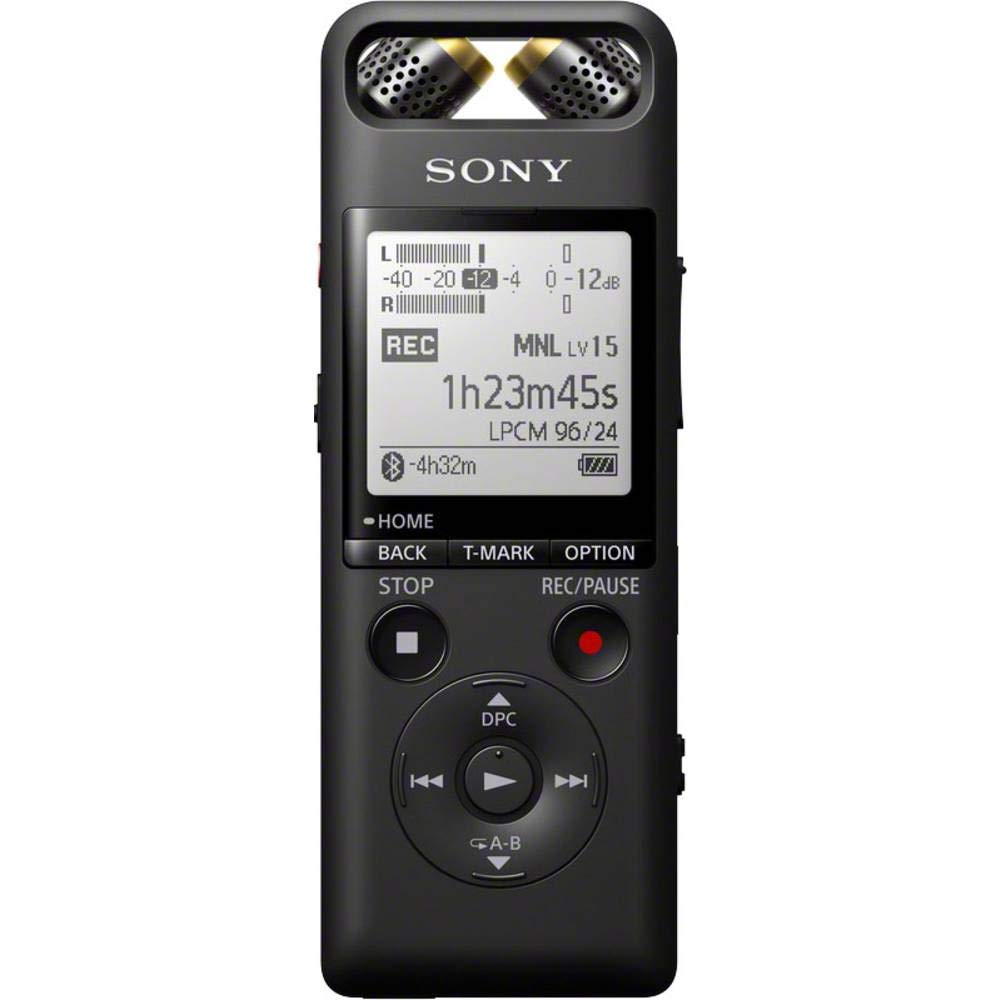
Sony PCM-A10
The Sony PCM-A10 provides detailed stereo recording in a notably compact format. It is particularly convenient for vocal lessons, rehearsals, lectures, interviews and travel where carrying a larger recorder may be unnecessary.
Verdict: A refined compact option for singers and teachers prioritising portability and straightforward high-quality stereo recording.
Best for Professional Music Recording
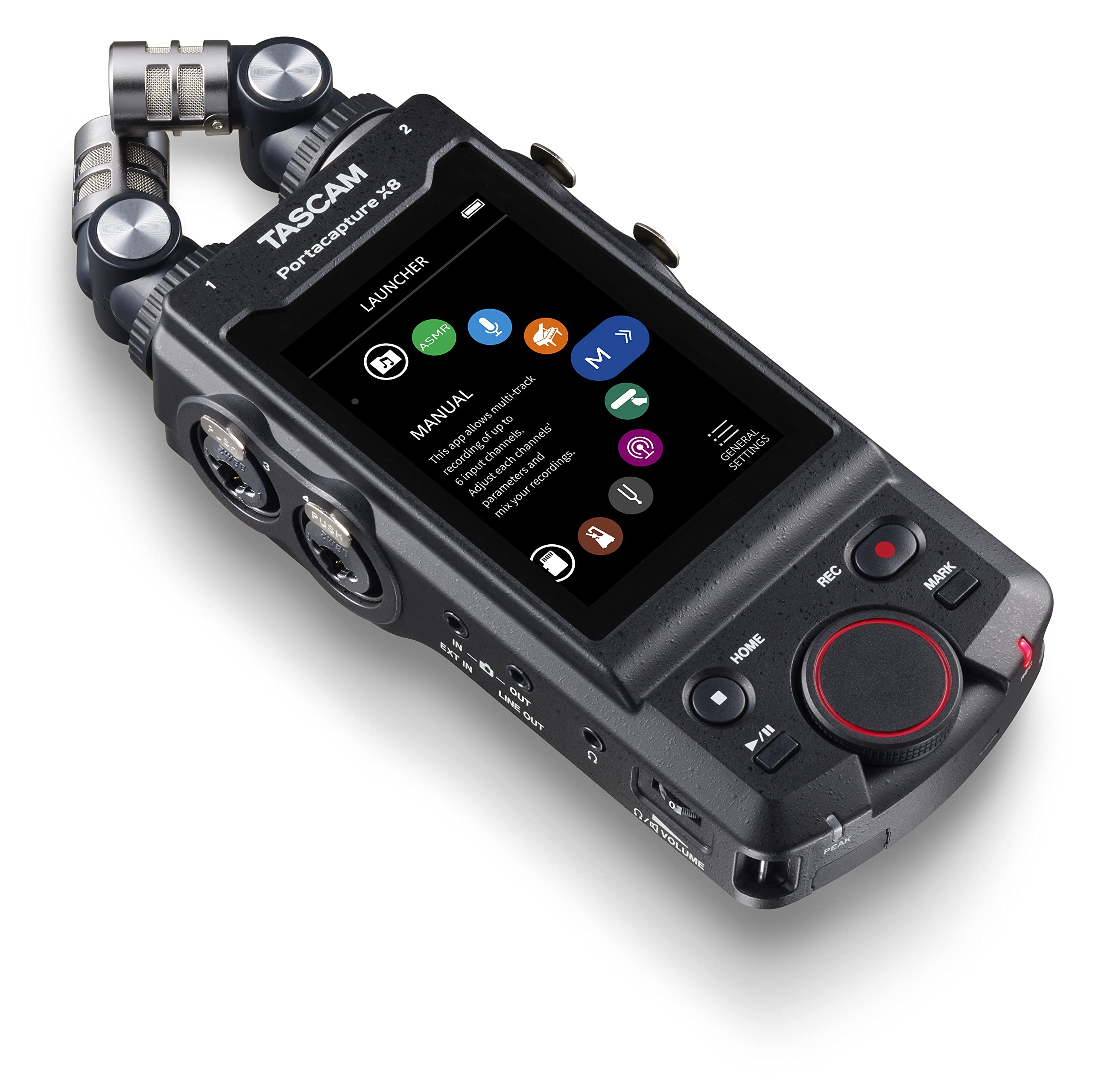
Tascam Portacapture X8
The Tascam Portacapture X8 combines high-resolution recording, professional microphone connectivity, integrated stereo microphones and a touchscreen workflow. It suits concerts, acoustic instruments, ensembles, interviews, location recording and professional content production.
Verdict: A powerful professional portable recorder for musicians and creators requiring extensive control.
Sony PCM-D10
The Sony PCM-D10 is particularly suited to acoustic music where natural stereo imaging matters. High-quality built-in microphones and professional inputs make it relevant to classical singers, instrumentalists, recitals, rehearsals and location recording.
Verdict: A premium choice for acoustic and classical music recording where natural sound and stereo capture take priority.

Best for Singer & Piano Recording
Zoom H8
The Zoom H8 provides extensive input capacity for sessions involving several microphones or instruments. Voice, piano, room microphones and additional sources can be captured independently, making it useful for singer-pianists, ensembles, workshops, podcasts and live sessions.
Verdict: A strong multitrack option for singer-pianist sessions, ensembles and recordings involving several simultaneous sources.

Tascam DR-40X
The Tascam DR-40X combines integrated stereo microphones with external microphone inputs in an accessible four-track format. It works well for rehearsals, voice and piano, teaching, workshops and small ensembles.
Verdict: A practical and comparatively affordable recorder for voice, piano, rehearsals and straightforward multi-source recording.

Best Budget Portable Recorder
Zoom H1essential
The Zoom H1essential brings 32-bit float recording to a compact entry-level handheld recorder. Its simple operation suits singers, students, teachers, journalists and creators needing straightforward portable recording.
Verdict: An accessible route to portable 32-bit float recording for lessons, rehearsals, interviews and everyday audio capture.

Tascam DR-05X
The Tascam DR-05X is a straightforward stereo recorder built around simplicity and reliable everyday operation. It suits vocal practice, lessons, meetings, interviews, lectures and rehearsal reference recordings.
Verdict: A dependable entry-level handheld recorder for users who value simplicity and conventional stereo recording.

Best Pocket Recorder
Sony ICD-TX660
The Sony ICD-TX660 prioritises portability with a slim design for speech, meetings, lectures, interviews, teaching and note-taking. It is particularly useful when discreet recording and minimal setup matter more than multiple microphone inputs.
Verdict: An exceptionally compact recorder for speech and everyday voice capture when portability is the priority.

Best Field Recorder
Zoom F3
The Zoom F3 is a compact professional field recorder with two XLR inputs and 32-bit float recording. Designed primarily for external microphones, it suits location sound, interviews, filmmaking, acoustic recording and professional field work.
Verdict: A remarkably compact professional field recorder for users working with external XLR microphones.

Zoom F6
The Zoom F6 expands the field-recorder concept with six professional inputs, 32-bit float recording and timecode support for demanding production environments involving several microphones.
Verdict: A professional multichannel field recorder for film, broadcast and demanding location-production workflows.

Best for Podcasting & Interviews
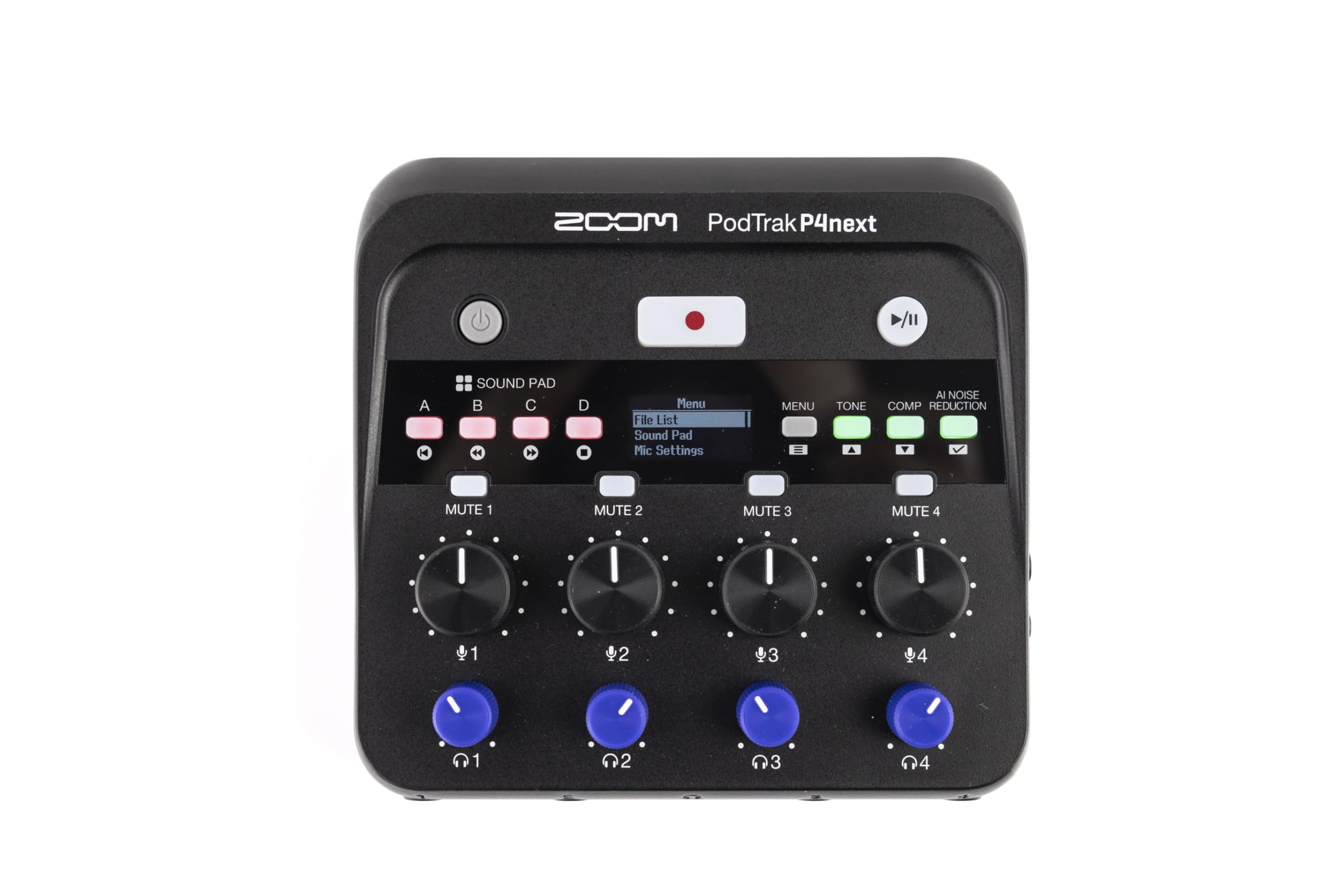
Zoom PodTrak P4
The Zoom PodTrak P4 is designed specifically for spoken-word production. Multiple microphone inputs and independent headphone outputs suit interviews, multi-person podcasts, coaching discussions, educational programmes and mobile productions.
Verdict: A highly practical portable podcast recorder for interviews and multi-person spoken-word production.
Best for Video Production
Tascam DR-60D MKII
The Tascam DR-60D MKII is purpose-built for DSLR and video workflows. Its professional microphone inputs and camera-oriented design suit interviews, documentaries, educational videos, YouTube production and location shoots.
Verdict: A specialised and practical audio recorder for DSLR, mirrorless camera, interview and video-production workflows.

Practical Buying Considerations
| Consideration | Why It Matters | Typical Buyer Mistake | Practical Insight |
|---|---|---|---|
| 32-Bit Float | Provides extensive headroom when recording unpredictable dynamics. | Assuming it automatically guarantees excellent sound. | It is particularly useful for live performance and powerful voices, but microphone quality and placement still matter. |
| Built-In Microphones | Allow immediate stereo recording without additional equipment. | Buying a field recorder without realising that external microphones are required. | For lessons and rehearsals, good integrated microphones can make a handheld recorder considerably more convenient. |
| XLR Inputs | Allow professional external microphones to be connected. | Choosing more inputs than the recording workflow actually requires. | Two inputs are sufficient for many users; larger sessions may justify four or more. |
| Portability | Recorder size affects how likely it is to be carried and used regularly. | Buying the most powerful model regardless of size. | A smaller recorder may be more useful for everyday vocal practice and travel. |
| Recording Format | WAV preserves substantially more recording information than compressed formats. | Using MP3 as the default format for important recordings. | For music and professional voice recording, WAV is normally the better working format. |
| USB Connectivity | Some recorders can also operate as audio interfaces with computers or mobile devices. | Assuming every USB connection supports every phone or computer directly. | Check the recorder, device, adapter, power, and operating-system requirements before buying for mobile use. |
Frequently Asked Questions About Portable Recorders
Which portable recorder is best for most users? The Zoom H6 Essential is one of the strongest all-round options for users who want built-in microphones, multiple professional inputs, 32-bit float recording, and enough flexibility to accommodate more advanced recording setups later.
Which portable recorder is best for singers? The ideal choice depends on the recording context. Compact handheld models such as the Zoom H5 Studio work well for lessons and rehearsals, while the Zoom H6 Essential provides greater flexibility for external microphones, voice-and-piano recording, and more complex sessions.
Is 32-bit float recording worth having? 32-bit float is particularly valuable when recording sources with unpredictable dynamics, including powerful singing, live music, interviews, and location sound. It provides much greater flexibility around recording levels, although it does not replace good microphone technique or prevent distortion occurring elsewhere in the recording chain.
Can I record a singer and piano with one portable recorder? Yes. A good stereo handheld recorder can capture singer and piano naturally when positioned carefully in an appropriate acoustic. Recorders with multiple XLR inputs also allow separate microphones to be used when greater control is required.
Which recording format should I use? WAV is generally preferable for music, professional voice work, editing, and archival recording because it preserves uncompressed audio. MP3 is useful for reference recordings and convenient sharing where smaller file sizes are more important.
How far should a portable recorder be from a singer? There is no universal distance because the voice, room, microphone configuration, and desired balance all matter. For classical singing, increasing the distance can allow the acoustic and complete vocal sound to develop naturally, whereas speech and close vocal work generally require shorter distances.
Do I need XLR inputs? Not necessarily. Integrated microphones are sufficient for many rehearsals, lessons, interviews, and reference recordings. XLR inputs become important when you want to use dedicated condenser or dynamic microphones, record several sources independently, or build a more professional signal chain.
Can a portable recorder work as an audio interface? Many current portable recorders provide USB audio-interface functionality, allowing them to send audio directly to compatible computers or mobile devices. Compatibility, adapter requirements, and power arrangements vary by recorder and device.
What is the difference between a handheld recorder and a field recorder? Handheld recorders usually include integrated microphones and are designed for immediate standalone recording. Professional field recorders often prioritise external microphone inputs, preamps, timecode, multichannel recording, and production features rather than built-in microphones.
Which portable recorder is best for interviews and podcasts? Dedicated systems such as the Zoom PodTrak P4 are particularly convenient for multi-person podcasting, while compact field recorders such as the Zoom F3 provide greater flexibility when professional external microphones are required for location interviews.
Portable Recorder Comparison Table
| Recorder | Category Strength | Recording Approach | Best Use Case | Verdict Positioning |
|---|---|---|---|---|
| Zoom H6 Essential | Best Overall | 32-bit float, built-in mics + XLR | Vocals, music, rehearsals, multi-source recording | Best all-rounder |
| Zoom H5 Studio | Singers & Vocal Practice | Portable handheld recording | Lessons, rehearsals, acoustic music | Strong singer-focused choice |
| Tascam Portacapture X8 | Professional Music | Advanced portable multitrack | Music, location and professional recording | Feature-rich professional option |
| Sony PCM-D10 | Acoustic Recording | Premium stereo + external inputs | Classical music and natural acoustics | Premium acoustic specialist |
| Zoom H8 | Singer & Piano | Multitrack recording | Multiple performers and microphones | Maximum handheld expandability |
| Zoom H1essential | Budget | Compact 32-bit float | Practice, lessons and everyday recording | Excellent entry point |
| Sony ICD-TX660 | Pocket Recording | Ultra-compact voice recording | Speech, meetings and interviews | Maximum portability |
| Zoom F3 | Field Recording | 32-bit float + external XLR microphones | Location sound and professional microphones | Compact professional field choice |
| Zoom PodTrak P4 | Podcasting | Multi-microphone spoken-word production | Podcasts and interviews | Dedicated podcast solution |
| Tascam DR-60D MKII | Video | Camera-oriented external microphone recording | DSLR, video and filmmaking | Specialist video recorder |
Professional Advice for Singers: When listening back to a recording, consider more than pitch accuracy. Listen for diction, vowel consistency, vibrato, breath noise, resonance, dynamic control, and the relationship between the voice and accompaniment. Recorder placement also matters: moving a recorder further from a powerful classical voice can produce a more representative balance between direct sound and room acoustic.
Build Your Complete Recording Setup
- Condenser Microphones – detailed studio vocal recording
- Dynamic Microphones – live vocals, speech, and robust recording setups
- Audio Interfaces – computer-based recording with professional microphones
- Studio Monitors – accurate playback and monitoring
- Portable Recorder Tutorials – practical recording and setup guidance


