

Essential Elements of Singing: Technique, Vocal Health & Performance
In This Guide
- Coordination Before Strength
- Breath Management & Support
- Vocal Warm-Ups
- Hydration, Caffeine & Rest
- Posture, Movement and Physical Coordination
- Articulation, Text and Meaning
- Mental Focus and Performance Confidence
- The Vocal Performance Cycle
- Recommended Books & Resources
Singing combines physical coordination, listening, technique and artistic expression. Improving your voice is therefore not simply a matter of singing more: it means learning to manage breath efficiently, reduce unnecessary tension, coordinate the voice across its range and communicate music with greater freedom.
As a professional singer and vocal coach, I find that lasting improvement usually comes from understanding how these elements work together rather than trying to develop volume or range in isolation. In this guide, I look at some of the fundamental principles that can help singers develop a more reliable, expressive and healthy technique.
Coordination Before Strength
One of the most important principles in vocal development is to establish efficient coordination before trying to increase power, range or stamina. More effort does not automatically produce a better voice. If the underlying coordination is unstable, adding volume or breath pressure can simply introduce more tension.
In my experience, it is more useful to begin by finding a sound that feels free, responsive and repeatable. From there, greater intensity and dynamic range can be developed without sacrificing ease or flexibility.
This is also why apparently simple exercises can be so valuable. Singing at a moderate intensity allows us to observe how the breath, vocal folds, resonance and articulation are working together without making volume the primary objective.
As coordination becomes more reliable, strength and stamina can develop around it. The aim is not to make singing physically passive, but to use effort where it is actually needed rather than compensating with unnecessary muscular tension. Efficiency should come before intensity.
Breath Support and Diaphragmatic Coordination
Different styles of singing require very different approaches to vocal production. Classical singing, musical theatre, jazz, pop and other contemporary styles do not produce or shape sound in exactly the same way. Nevertheless, efficient management of breath and a well-coordinated physical support system remain important foundations across styles.
For beginning singers, breathing can often be inconsistent: the abdominal wall and surrounding musculature may move without sufficient coordination, and the singer may compensate by using unnecessary pressure elsewhere in the body. Breath training should therefore develop control and coordination rather than simply encourage the singer to take larger breaths or push more air.
I find physical exercises particularly useful here. Static and dynamic plank variations can develop awareness and control of the trunk, while very simple exercises can sometimes be surprisingly effective. For example, sitting on a chair and lightly lifting the knees can immediately make the singer more aware of the muscles involved in stabilising the torso.
I have also seen excellent results when singers work while sitting on a fitness ball. Because the surface is unstable, the body has to make continuous small postural adjustments. This can give the singer immediate sensory feedback about balance, breathing and the coordination of the trunk without requiring excessive conscious muscular effort.
There is an interesting parallel with research into body schema and tool use. Experiments in primates and humans have shown that, after using a tool, the nervous system can incorporate aspects of that tool into its representation of the body’s actions and surrounding space. I would not claim that a fitness ball literally becomes an extension of the diaphragm, but I suspect that a related principle of sensory feedback may help explain why an external object can sometimes change a singer’s awareness of breathing and physical coordination so effectively.
The objective is ultimately not to make every singer breathe in an identical way. It is to develop a sufficiently stable and responsive support system that the breath can serve the particular vocal demands of the music being sung.
A Classical Perspective: Luciano Pavarotti on Breath Support
Classical singing places particularly demanding requirements on breath management. An operatic singer may need to sustain long phrases, negotiate a wide range and project over an orchestra without electronic amplification. Breath support therefore became a central subject in the teaching and practice of many great classical singers.
Luciano Pavarotti spoke frequently about the importance of the diaphragm and support in his own singing. His explanations are valuable not because every singer should reproduce an operatic technique, but because they demonstrate how seriously an elite singer approached the coordination of breath, throat, resonance and concentration.
In the recordings below, Pavarotti discusses these principles from the perspective of his own technique and experience.
Here you can listen to what Luciano Pavarotti thinks about diaphragmatic support, which is so important for any type of singing.
Here, Luciano Pavarotti speaks about Concentration, Diaphragm, Throat and Resonance.
Vocal Warm-ups: Preparing Your Voice
I strongly believe that the first 15–25 minutes of a vocal warm-up should remain predominantly in the middle of the voice. Rather than immediately testing the extremes of the range, this initial period allows the voice and the surrounding musculature to become progressively more active while coordination between breath, phonation and resonance settles into place.
I usually begin with exercises such as lip trills, humming, glissandi and comfortable vocal patterns, gradually increasing their technical demands. Only as the voice becomes more responsive do I begin to explore a wider range, greater dynamic variation, different vowels and the specific demands of the repertoire.
In my experience, after approximately 40–45 minutes of progressive warming up, the voice often begins to feel considerably more open and its fuller range becomes available without having been forced prematurely.
For this reason, I prefer to allow around 40–50 minutes of structured vocal preparation before an audition, an important rehearsal with other singers or musicians, or a public performance. The objective is not to tire the voice before singing, but to arrive at the important work with the voice already responsive, coordinated and ready to operate across its required range.
The precise warm-up will naturally vary between singers and according to the repertoire, vocal condition and demands of the day.
Hydration, Caffeine and Rest: Caring for Your Instrument

Hydration, rest and the way we manage stimulants can all influence how we feel when singing. Regular water intake is important, but immediately before a performance I prefer moderate, consistent hydration rather than drinking a large quantity at once.
Singers should also be aware of their individual response to caffeine. Coffee and other caffeinated drinks can increase alertness and may be useful during periods of rehearsal or concentrated work; taken alongside carbohydrates, they can also be helpful when sustained physical and mental energy is required.
Immediately before a performance, however, I approach caffeine much more cautiously. Caffeine stimulates the central nervous system and can increase physiological arousal. For a singer who already experiences a natural rise in adrenaline before going on stage, additional stimulation may contribute to a racing heart, restlessness, excessive alertness or a feeling of being mentally overactivated.
This matters because demanding singing requires a particular balance: considerable physical energy combined with concentration, coordination and the ability to remain mentally calm. The aim before performing is not to eliminate adrenaline, which is a natural part of performance, but to avoid pushing an already activated nervous system further than necessary.
For this reason, I prefer simple water and sensible hydration before an important performance, while treating caffeine according to the singer’s established tolerance and previous experience rather than introducing additional stimulation at the last moment.
Adequate sleep and recovery are equally important. Fatigue can affect concentration, physical coordination and the singer’s perception of effort, so vocal preparation should be considered alongside the condition of the whole body.
Posture, Movement and Physical Coordination
For singers, I prefer to think about physical coordination rather than trying to maintain one idealised singing posture. The body needs to provide stability while remaining sufficiently free and responsive for breathing, movement and vocal expression.
Regular breath work can be an important part of developing this awareness. I also recommend exploring disciplines such as Pilates and yoga, which can help develop mobility, balance, body awareness and coordination. General physical training—whether in the gym or at home—can be equally valuable. A stronger and better-coordinated body gives the singer a more reliable physical foundation from which to work.
I also believe that developing an awareness of the fascia and the body’s interconnected connective-tissue system can be a significant part of this work. Rather than thinking only about individual muscles, mobility and stretching work can help us experience how movement in one area relates to movement elsewhere in the body. For a performer, this awareness can be particularly valuable during rehearsals and performances, when breathing, gesture, posture and vocal production are continually interacting.
The objective is not simply to become stronger or more flexible, but to develop greater coordination between different parts of the body. Singing is a whole-body activity, and restrictions or unnecessary tension in one area can influence movement and our overall sense of physical freedom.
Consistency is essential. Physical coordination and mobility develop through regular practice rather than occasional intensive sessions. Training once a month is unlikely to produce meaningful adaptation; relatively modest work performed consistently can have a much greater effect over time.
For me, the ultimate goal is a body that supports the voice without becoming rigid—a body capable of stability, freedom of movement and increasingly refined coordination.
Articulation, Text and Meaning
For me, clear articulation begins long before we sing the first note. Before working on the vocal demands of a song, I believe the singer should have a deep knowledge of the text: every word, every section and, importantly, the meaning of the complete work.

The text should gradually become one continuous thought in the singer’s mind, rather than a sequence of individual words that must be consciously remembered during performance. I therefore find it valuable to work with the text independently before adding the full demands of singing.
This preparation creates a much stronger foundation for vocal coordination. The brain already understands where the thought is going; the nervous system and articulatory muscles are familiar with the sequence; and the voice can then become part of an organisation that has already been established rather than trying to solve language, meaning and vocal technique simultaneously.
Articulation should therefore be more than simply pronouncing consonants clearly or shaping vowels correctly. The words carry the musical thought. When the singer knows the text deeply enough, pronunciation, phrasing, breath and vocal expression can begin to function as parts of the same communicative process.
Mental Focus and Performance Confidence
Technical preparation alone does not guarantee a successful performance. A singer must also learn to remain focused and responsive when technique is placed under the pressure of an audition, rehearsal or public performance.
I recommend approaching a rehearsal period or an important performance strategically, with planning and a clear vision of the result you want to achieve. Rather than treating every rehearsal as an isolated event, consider what needs to be accomplished, when the most demanding work should take place, how vocal and physical energy should be distributed, and what should already feel secure as the performance approaches.
This strategic approach can significantly change the quality of preparation. It encourages us to distinguish between periods of exploration, technical work, consolidation and performance readiness instead of trying to achieve everything at once.
I also believe that confidence is built primarily through preparation and repetition rather than simply trying to convince ourselves to feel confident. The more thoroughly we know the music, the text and the technical demands of the material, the less mental space needs to be occupied by uncertainty during performance. The objective is to prepare deeply enough that, on stage, we can stop analysing every technical detail and allow the performance to unfold.
Mental conditioning is a substantial subject in its own right. In my dedicated guide to stage confidence and mental conditioning for singers, I explore performance anxiety, visualisation, mindfulness, preparation under pressure and what singers can learn from the mental training of elite performers.
The Vocal Performance Cycle
Good vocal performance does not begin when you start singing or end with the final note. I find it more useful to think of performance as a cycle: preparation, energy management, peak performance, recovery and growth.
Preparation includes technical work, learning the music, warming up appropriately and arriving physically and mentally ready to sing. As a performance approaches, preserving energy becomes increasingly important. Singers need to consider not only how much they sing, but also unnecessary speaking, demanding rehearsals, physical fatigue and how their vocal resources are distributed across the day.
During performance, the aim is to bring together technique, concentration and musical expression without constantly analysing every technical detail. Afterwards, recovery matters too. Rest, hydration, sleep and sensible management of subsequent vocal demands allow the voice and body to recover.
The final stage is growth. Recordings, feedback and reflection can reveal what worked, what was less reliable and what should become part of future practice. In this way, each performance contributes to preparation for the next one.
For a more detailed exploration of each stage, see my guide to the complete vocal performance cycle.
Recommended Books
Disclosure: The links above are Amazon affiliate links. This means that if you choose to make a purchase, I may receive a small commission at no extra cost to you. This helps support the work I do in creating resources for singers and readers interested in breathing, voice, and wellness.
Set Your Voice Free by Roger Love
Roger Love, renowned vocal coach to the stars, offers a clear and accessible method to unlock your voice. This book includes practical exercises that strengthen tone, pitch, and projection. Perfect for aspiring performers, speakers, and singers alike.

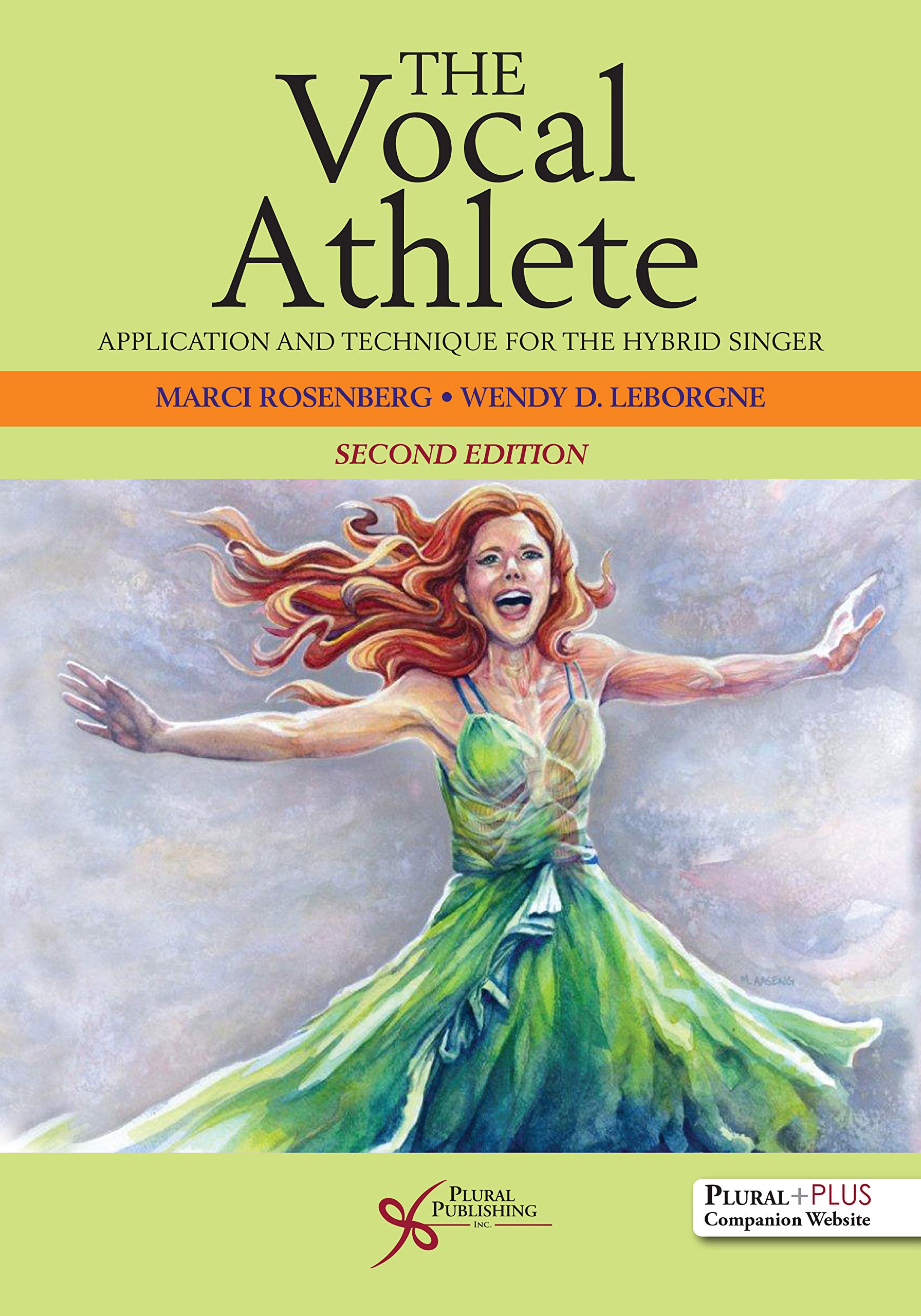
The Vocal Athlete by Wendy D. LeBorgne
A comprehensive training manual combining science and artistry. Designed for voice professionals, this guide addresses stamina, vocal health, and technical mastery. Ideal for singers who treat their voice as an instrument to be finely conditioned.

Singing for the Stars by Seth Riggs
Based on the Speech Level Singing technique, this classic text has shaped many of today’s top vocalists. It teaches how to transition smoothly across vocal registers without strain. A must-read for singers seeking power, control, and effortless sound.

The Voice Book by Kate DeVore & Starr Cookman
A user-friendly guide covering breath support, resonance, articulation, and vocal presence. Geared toward both singers and speakers, this book bridges technique with expressive communication. Excellent for those who use their voice professionally in any field.

Raise Your Voice by Jaime Vendera
An intense, results-driven system for expanding range, power, and vocal stamina. Vendera’s techniques challenge conventional training with a focus on volume, durability, and confidence. A favorite among rock and metal vocalists.

Riffs, Runs & Jazz Improvisation
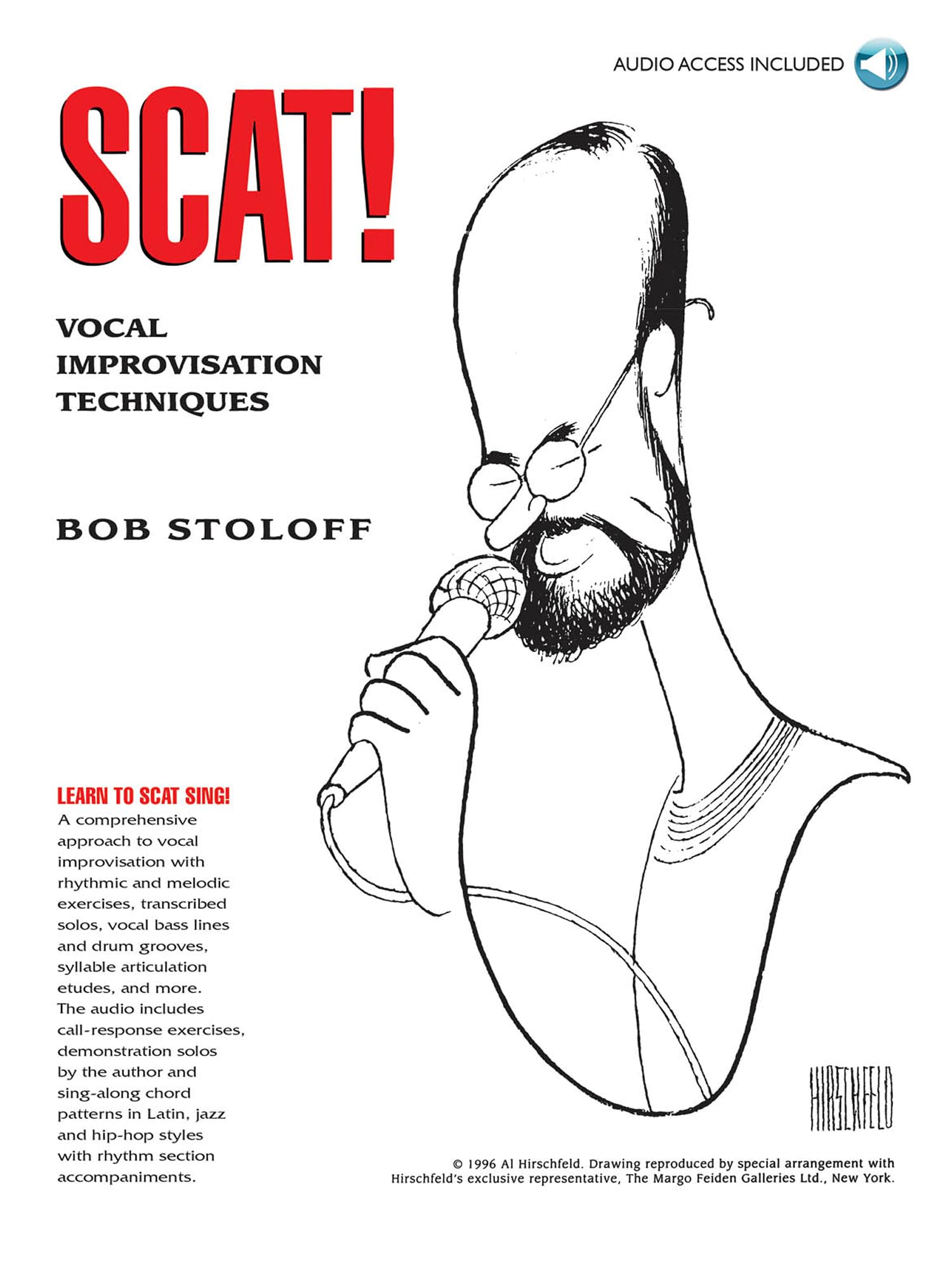
Scat! Vocal Improvisation Techniques by Bob Stoloff
This hands-on method by acclaimed jazz educator Bob Stoloff introduces singers to the art of scat through structured, musical exercises. It covers syllable articulation, rhythmic phrasing, pitch variation, and call-and-response techniques to help vocalists improvise with confidence and musicality. Ideal for jazz singers and adventurous vocalists looking to expand their creative freedom and stylistic agility.
Vocal Workouts for the Contemporary Singer by Anne Peckham
Published by Berklee Press, this book offers a comprehensive training program for modern singers. With detailed vocal warm-ups, style exercises, and tips on tone, breathing, pitch control, and phrasing, it bridges technique with real-world application. Whether you sing pop, R&B, jazz, or musical theatre, this resource builds strength, flexibility, and stylistic control — all while maintaining vocal health.


