

Resonance in Singing: The Science of Harmonics, Overtones & Vocal Sound
The Importance of Resonance in Singing
When I first started singing, one of the most important ideas I encountered was the role of resonance. At the time, I didn’t fully understand what it meant, but later I realised it is the quality that makes a voice vibrant, powerful, and unique.
Two singers might sing the same note at the same volume, yet one fills a hall with ease while the other struggles to be heard. That difference isn’t about strength — it’s about resonance and how it is managed.
It’s important, however, not to treat “placement of resonance” as an ultimate solution. Over-focusing on this can easily create problems: a nasal tone, a strained sound from a compressed throat, or limited vocal range. True resonance should enhance freedom, not restrict it.
What Resonance Really Is
I like to think of resonance as the voice’s natural amplifier. Just as a violin’s wooden body enhances the sound of its strings, the human voice resonates through the throat, mouth, nasal cavities, chest, and even the whole body.
Italian masters often spoke of blending voce di testa (head voice) with voce di petto (chest voice). Resonance, therefore, is not one fixed point but a balance:
Chest resonance brings warmth and depth.
Head resonance adds brilliance and lightness.
Mask resonance, felt around the cheekbones and forehead, provides clarity and projection.
A helpful image is to imagine an apple-sized space inside the mouth — allowing openness without collapsing the throat or lowering the soft palate too far. What to avoid: the larynx rising while the palate drops, which often creates a nasal or constricted sound.
Finding the right balance is like sculpture — refining proportions patiently through repetition, sensation, and careful listening. Some singers rely heavily on mask resonance to achieve quick high notes, but this often sacrifices richness and chest depth. The art is in proportion, guided by the music and style you’re performing.
Why Resonance Beats Volume
When I was younger, I thought singing loudly meant singing powerfully. In reality, forcing volume only leads to strain: tired vocal cords, poor breath control, and unwanted muscular tension.
Resonance, on the other hand, projects the voice naturally. This is why trained opera singers can fill large halls without microphones. And even in contemporary music, resonance gives singers efficiency, expression, and stamina.
The Science Behind It
Scientifically, the vocal folds vibrate to create pitch and overtones. The vocal tract then amplifies certain frequencies, like tuning an instrument. By adjusting tongue, lips, or soft palate, singers “tune” their resonance.

This diagram illustrates two fundamental properties of sound waves: wavelength and period. In singing, these oscillations shape how pitch, resonance, and harmonics travel through space. The human voice functions in a similar way — vibrating air in repeating patterns that the vocal tract then amplifies and colours.
“Sound wave physics” by Kulayada, licensed under CC BY-SA 4.0 via Wikimedia Commons.
This is why in singing lessons in London, I often guide students through a small set of resonance exercises. They are not the only ones, but they illustrate important ideas and open awareness in the singer.
How Do We Hear? — The Biological Symphony of Sound
Understanding how sound travels through the ear to the brain reveals the foundation of resonance — the natural amplification that shapes every singer’s tone. This official educational video from the National Institute on Deafness and Other Communication Disorders (NIDCD), part of the U.S. National Institutes of Health (NIH), demonstrates how sound waves are transformed into electrical signals that define perception, timbre, and emotional response.
This animated video illustrates how sounds travel from the ear to the brain, where they are interpreted and understood. Also available: How Do We Hear?, a step-by-step explanation.
© Public Domain. Courtesy of the NIDCD, part of the U.S. National Institutes of Health.
Five Resonance Exercises
Humming – starting with a gentle hum and noticing the vibration in the mask area.
The vowel ladder – moving through “ah, eh, ee, oh, oo” to feel how each vowel shifts resonance.
Changing rooms – singing the same phrase in different spaces, from a practice studio to a hall, to sense how resonance interacts with the environment.
Exploring extremes – producing a very dark, heavy sound, then a very light, bright sound, and finding a point where both qualities meet.
Vowel transitions – beginning with “uuh,” which supports a vertical, lower position, and then carefully moving into “aah” or “eeeh.” Many singers unconsciously squeeze the throat on these horizontal vowels, and noticing this is essential to keeping resonance free.
I also encourage singers to use visualisation: imagining that the listener is 1 metre away, then 10 metres, then 50 metres. The sensation of spaciousness usually helps the voice amplify its frequencies naturally, without force.
The Visible Breath of Sound
When I watch this animation, I’m reminded that every sound we hear is not a vague vibration but a precise pattern of numbers, geometry, and proportion. What appears as music or speech is, in essence, air shaped by mathematics — oscillations moving in perfect order through time.
The speaker’s diaphragm here shows what happens inside the human body when we sing: invisible frequencies become visible structure. Each sound wave carries measurable ratios — the same principles that govern harmony, architecture, and even planetary motion.
In this way, sound becomes a mirror of the universe itself: proportion translated into motion, energy transformed into audible form.

Image: “Sound wave animation” by Kyle Thayer, Wikimedia Commons, CC0 1.0 Public Domain.
Resonance and Colour
To understand the physics behind these resonant colours and tones, it’s helpful to distinguish between harmonics and overtones — two terms often used interchangeably but describing slightly different phenomena. Video: “Understanding the Distinction Between Overtones and Harmonics” by Sound Meditation (YouTube, 2019)
Before moving into deeper science, it helps to remember that every colour of the voice — dark or bright, warm or brilliant — begins with vibration.
To understand how these resonances form, we can look briefly at the difference between harmonics and overtones — the frequencies that give each tone its unique texture.
Resonance is not only about projection but also about colour:
Darker resonance creates warmth and drama.
Brighter resonance gives sparkle and energy.
I sometimes encourage singers to approach resonance almost through a kind of synesthetic awareness. Synesthesia is the blending of senses — when people, for example, hear sounds as colours. In singing, this way of thinking can be surprisingly helpful:
A dark, rich sound may feel like deep blue or burgundy.
A brighter resonance might suggest gold, silver, or white light.
A balanced resonance can feel like mixing shades on a painter’s palette until the right proportion emerges.
For many singers, these associations make the work more intuitive. Instead of thinking mechanically about muscles or placement, they imagine colour and light — and the voice responds with greater freedom.
Understanding the Distinction Between Overtones and Harmonics
In the study of resonance, the terms overtones and harmonics are often used interchangeably, yet their meanings differ in a way that profoundly shapes our understanding of sound. Harmonics are mathematically precise frequencies — integer multiples of a fundamental tone — that form the backbone of musical resonance. Overtones, on the other hand, include all resonant frequencies above the fundamental, whether they are harmonically related or not. This distinction helps singers, instrumentalists, and sound engineers appreciate the intricate structure of tone that gives each voice or instrument its unique timbre. Video: “Harmonics and Overtones” by physicshelp.online (YouTube, 2018)
The Physics of Dissonance
If resonance reveals how vibration unites, dissonance shows where vibration collides.
In physics, dissonance is not merely an aesthetic clash — it’s a measurable interference between frequencies, a “zone of discomfort” where two waves are close enough to compete but not close enough to merge. What the ear perceives as tension is, in truth, a physical struggle for equilibrium — a dance between waveforms slightly out of sync.
The fascinating video below from MinutePhysics explores this relationship in depth, showing how beating, interference, and overtone alignment determine whether two sounds feel consonant or dissonant. It demonstrates that harmony itself arises from the same forces that create dissonance — and that the line between them depends on the subtle mathematics of overtones.
From the gentle “beating” of two nearby sine waves to the complex 3D maps of chords and scales, the study reveals that harmony is not an arbitrary human invention but an acoustic consequence of the natural world. The same overtones that make one interval sing in tune can make another feel unstable — shifting from consonance to dissonance with the smallest change in overtone alignment.
When we listen, what we truly hear is the geometry of vibration — peaks and valleys of sound pressure that the ear translates into emotion. Dissonance gives music its chiaroscuro, the shadow that makes resonance visible, and the necessary contrast that allows harmony to be born.
The Birth of Harmony
Every sound, before it becomes music, begins as motion — the invisible trembling of air molecules responding to vibration. Force or pressure from a resonant object, such as a vocal cord or string, sets these molecules into motion, creating waves that travel through the air. The frequency of these oscillations determines the pitch we perceive, while their amplitude shapes the intensity or loudness of the sound.
In physical terms, frequency defines how often molecules move back and forth in one second — measured in Hertz — while amplitude describes how far they travel from their resting point, measured in decibels of sound pressure. Together they form the language of vibration, the raw material from which resonance and harmony emerge.
Video: “Harmonics and Overtones” by physicshelp.online (YouTube, 2018)
From these basic movements arises the harmonic series — nature’s blueprint for consonance. When frequencies align in simple ratios, they reinforce one another, producing the sensation of unity we call harmony. When they compete, we perceive tension — dissonance — that resolves only when the waves find equilibrium again. In singing, this alignment of frequencies is what allows the voice to bloom into resonance and project effortlessly, merging physics and emotion into one continuum of sound.
FAQ – Resonance, Dissonance & Harmony
Resonance is the natural amplification of sound that occurs when the voice vibrates freely within the body’s cavities — the chest, throat, mouth, and head. It’s what gives the voice fullness, projection, and richness without strain. True resonance feels effortless and alive.
Harmonics are exact multiples of a fundamental frequency; overtones include all resonant frequencies above that fundamental. Together, they create the unique tone colour of every voice. Skilled singers learn to balance these overtones, enhancing warmth, clarity, or brilliance at will.
Dissonance arises when two frequencies are close enough to interfere but not close enough to merge smoothly. This creates acoustic “beating” — a vibration that the ear perceives as tension. In music, dissonance is not an error but a necessary contrast that makes harmony expressive.
Harmony exists both in art and physics. When sound waves align in simple frequency ratios (like 2:1 or 3:2), they reinforce one another, producing a sensation of unity. These same mathematical ratios underpin the harmonic series, the foundation of all musical consonance.
By aligning breath, posture, and open resonance spaces, singers let vibration carry the sound rather than muscular effort. Techniques such as humming, vowel tuning, and sensation-based imagery train the body to amplify naturally, creating power with ease instead of pressure.
Each person’s vocal tract — skull shape, sinuses, soft palate, and chest structure — acts as a unique resonator. Even identical notes sung at the same pitch contain different overtone balances, giving every human voice its distinct colour and identity.
Yes. Awareness of how sound waves interact with air and space helps singers control projection, blend registers, and manage tone colour. Physics reveals that small adjustments in mouth shape, vowel balance, or placement can dramatically change resonance efficiency.
Resonance doesn’t only carry sound — it carries feeling. When vibration is aligned with breath and intention, the body becomes a living instrument of emotion. That’s why a resonant voice moves listeners more deeply than one that’s simply loud or accurate.
Different musical traditions emphasize different harmonic ratios depending on their instruments and tuning systems. Western harmony is built on the overtone patterns of strings and pipes, while other cultures base scales on the resonance of bells, drums, or the human voice itself.
Developing resonance enhances vocal clarity, authority, and endurance. It allows performers and speakers to project naturally in large spaces while maintaining expressive nuance. The same principles of acoustic balance that guide singers apply to spoken performance.
Beyond Opera
Though my background is classical, resonance is universal. Broadway singers rely on it to perform eight shows a week, while jazz and pop singers use resonance to mix registers and sustain flexibility. Whatever the genre — opera, West End theatre, or jazz — resonance is at the heart of communication.
A Word of Caution
Resonance should never feel forced. Signs of incorrect use include:
- Making the tone too dark in search of depth.
- Over-brightening until the sound becomes harsh.
- Collapsing posture, which kills resonance.
Every singer’s vocal structure (skull, mouth, jaw, soft tissues) is unique. There isn’t one universal placement that works for all. What matters is learning to adjust intelligently, finding a resonance strategy that fits your instrument.
Closing Thoughts
For me, resonance is the true magic of singing — the quality that turns sound into something memorable and deeply moving. It’s not about volume or force; it’s about creating a vibration that feels alive, free, and natural.
In our London vocal coaching studio, singers from the UK, US, and across Europe learn how resonance, dissonance, and harmony shape an authentic voice. Each tone reflects both the physics of vibration and the balance of emotion. Through focused singing lessons, students discover how to project effortlessly, blend precision with artistry, and transform sound into genuine expression.
I’ve seen countless singers experience that moment when the voice suddenly rings — clear, effortless, and full of life. It’s the point where science meets soul, where music becomes a universal language connecting minds, cultures, and hearts. To master resonance is to awaken not just the voice, but the whole self.
More in this category


Discover more from The Vocal Coach London


Recommended Books
As an Amazon Associate, I earn from qualifying purchases. Product details, pricing, and safety information are provided directly by Amazon.
Set Your Voice Free by Roger Love
Roger Love, renowned vocal coach to the stars, offers a clear and accessible method to unlock your voice. This book includes practical exercises that strengthen tone, pitch, and projection. Perfect for aspiring performers, speakers, and singers alike.

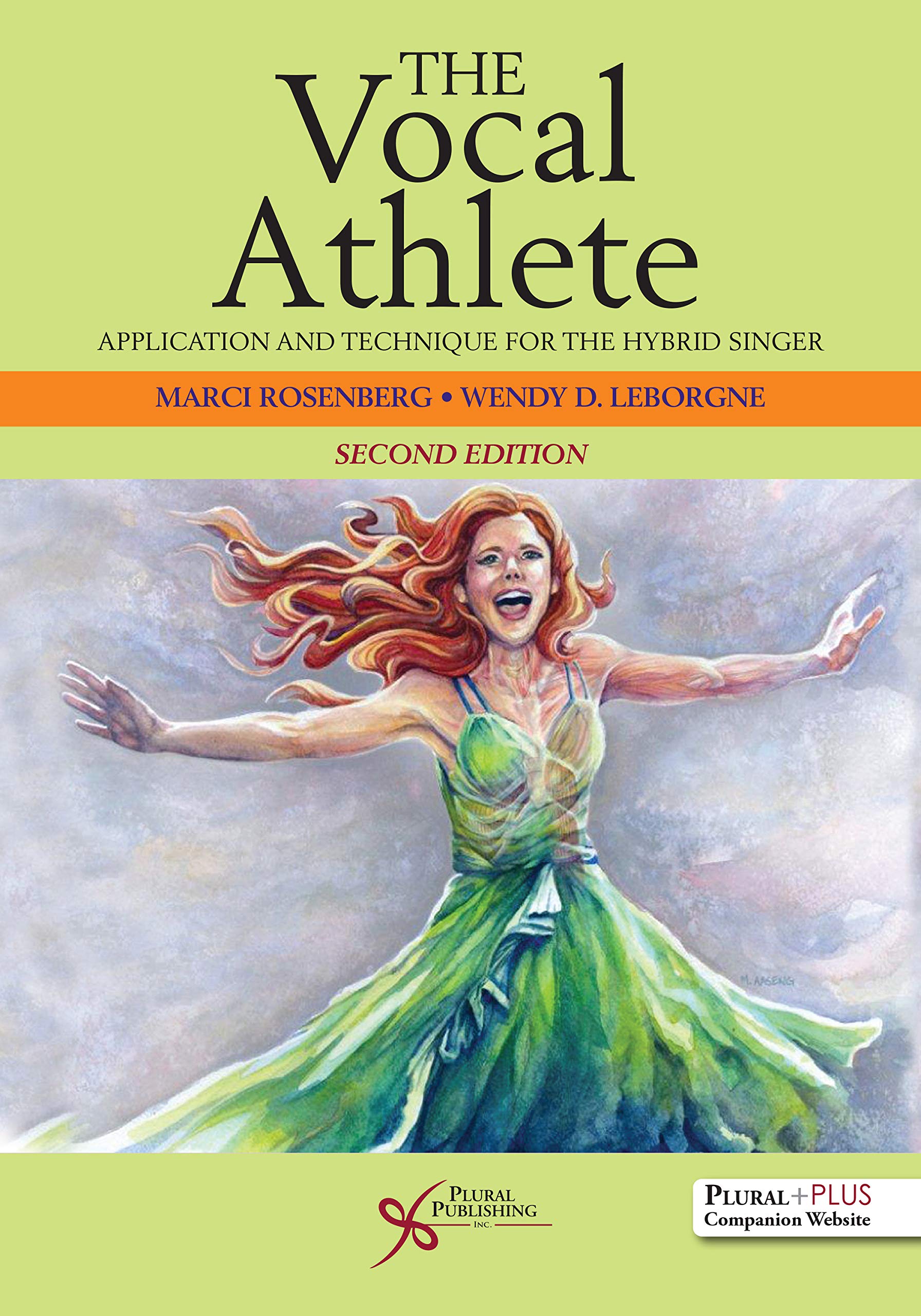
The Vocal Athlete by Wendy D. LeBorgne
A comprehensive training manual combining science and artistry. Designed for voice professionals, this guide addresses stamina, vocal health, and technical mastery. Ideal for singers who treat their voice as an instrument to be finely conditioned.
Singing for the Stars by Seth Riggs
Based on the Speech Level Singing technique, this classic text has shaped many of today’s top vocalists. It teaches how to transition smoothly across vocal registers without strain. A must-read for singers seeking power, control, and effortless sound.


The Voice Book by Kate DeVore & Starr Cookman
A user-friendly guide covering breath support, resonance, articulation, and vocal presence. Geared toward both singers and speakers, this book bridges technique with expressive communication. Excellent for those who use their voice professionally in any field.

Raise Your Voice by Jaime Vendera
An intense, results-driven system for expanding range, power, and vocal stamina. Vendera’s techniques challenge conventional training with a focus on volume, durability, and confidence. A favorite among rock and metal vocalists.
![[(Raise Your Voice 2: The Advanced Manual)] [Author: Jaime Vendera...](https://m.media-amazon.com/images/I/51gqBFKzjfL.jpg)
This is a Voice – 99 Exercises to Train, Project, and Harness the Power of Your Voice
This is a Voice offers 99 step-by-step exercises designed to unlock the full potential of your voice, whether you sing pop, jazz, or simply want to speak with more power and clarity. Written by leading vocal coaches Jeremy Fisher and Gillyanne Kayes, it blends breathing drills, projection techniques, and creative style work — even exploring beatboxing. A versatile guide for singers, speakers, and performers looking to build confidence and expressive control.

Riffs, Runs & Jazz Improvisation
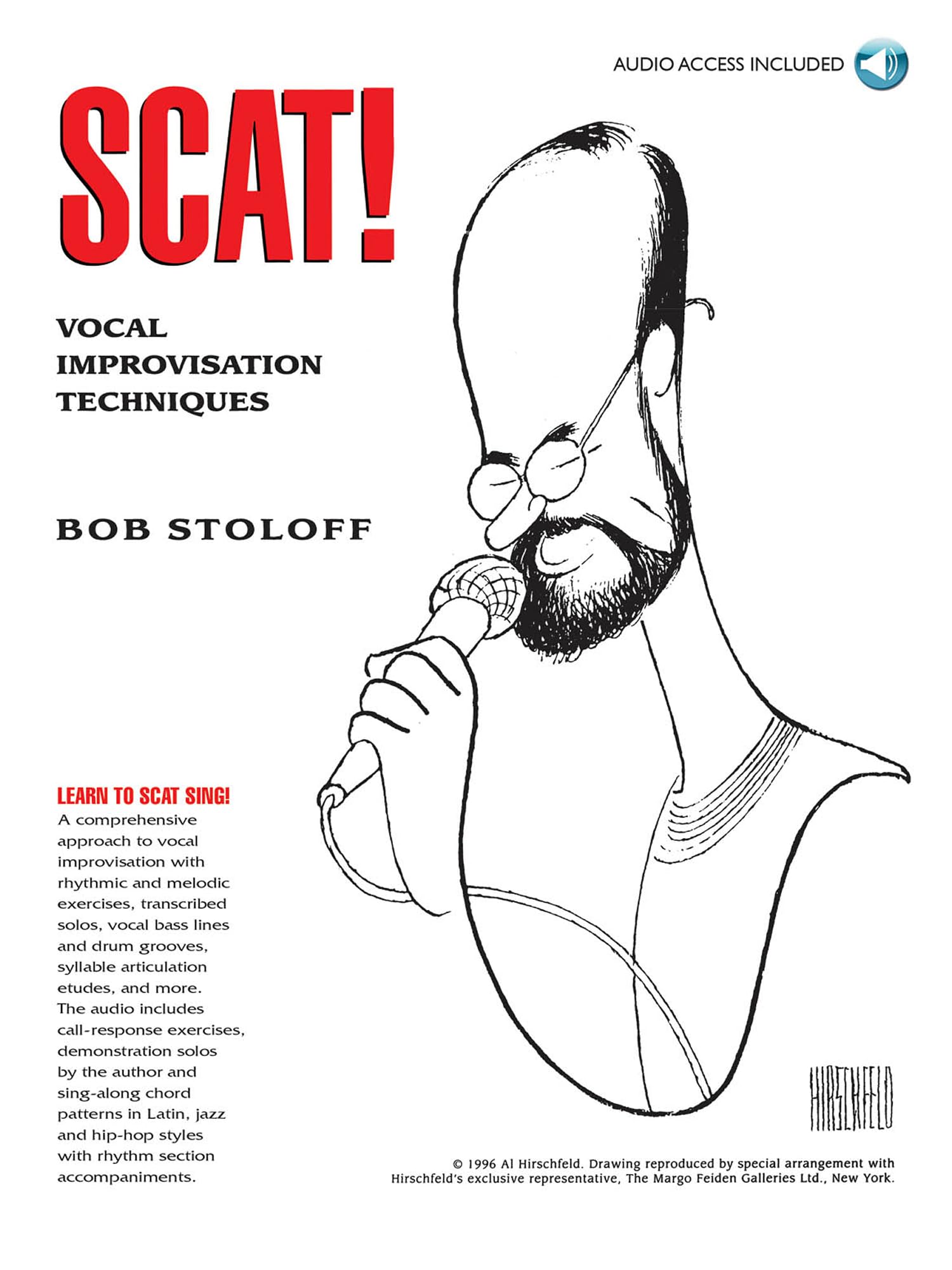
Scat! Vocal Improvisation Techniques by Bob Stoloff
This hands-on method by acclaimed jazz educator Bob Stoloff introduces singers to the art of scat through structured, musical exercises. It covers syllable articulation, rhythmic phrasing, pitch variation, and call-and-response techniques to help vocalists improvise with confidence and musicality. Ideal for jazz singers and adventurous vocalists looking to expand their creative freedom and stylistic agility.
Vocal Workouts for the Contemporary Singer by Anne Peckham
Published by Berklee Press, this book offers a comprehensive training program for modern singers. With detailed vocal warm-ups, style exercises, and tips on tone, breathing, pitch control, and phrasing, it bridges technique with real-world application. Whether you sing pop, R&B, jazz, or musical theatre, this resource builds strength, flexibility, and stylistic control — all while maintaining vocal health.

#SingingLessonsLondon #VocalResonance #VoiceProjection #SingingTechnique #LearnToSing